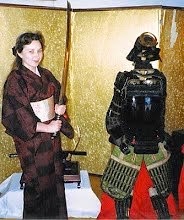
Some of you might know I'm originally from Stockton-on-Tees, where both sides of my family moved from Staffordshire c. 1900, drawn there by the steel industry. So I have been following the shutting down of the industry on Teesside with interest and a gloomy feeling.
Tonight, there was a very interesting programme on Radio 4 - Redcar: Made of Steel - click here It looks like the programme may not be available on the iPlayer, but you can catch a repeat on Monday afternoon.
A large chunk of the programme featured Craig Hornby, who made "A Century in Stone". Check out his website, and the interesting features re the film.
The BOS plant and the furnace that opened in the late 1970s, mentioned in the programme, were both projects my dad worked on. Before he retired nearly 20 years ago, he was a mechanical design engineer specialising in the cooling systems for the blast furnace hoods. We went on a tour of the BOS plant when I came back from Japan in 1992 and it was so interesting seeing the power of a steel furnace in production. I managed to catch him just before tonight's programme and he phoned afterwards, so I'm passing on his recommendation to listen!
They need bigger baskets plus a luggage rack on the back. How easy will it be to find a docking station when you want to get rid of the bike?
The bike hire system in Sakata had bright yellow bikes, which were otherwise normal 'sit up and beg' Japanese bikes. The old Jusco department store opposite the station was the depot. You signed the bike out but it was free! Bikes like those (in other colours) could be bought new for about £50 - the basic, very common school/work commuter bike - they were so cheap, there was no incentive for anyone to steal one (I expect a second hand bike would be practically worthless). All the railway stations had covered bike sheds, not the open racks we have here, so your bike stayed fairly dry and, because they weren't worth stealing, no one ever locked them either.
Biggest problem with the hire bikes was the 'one size fits all' idea, like with the London scheme. After bikes had been on the racks for a while, the seat adjusters seized up and wouldn't work. I made sure I got no.12 every time, as the seat height was just right for me!
I'm not likely to use the London cycle hire scheme though. In Japan, cyclist and pedestrians share the same cycleway/pavement/sidewalk, on a level with the road but separated by raised kerbs, so other traffic can't get into your space. Much safer than cycle lanes that have no real physical barrier. I hope there won't be too many accidents with the London scheme, but driving a car in central London is bad enough if you are not used to the volume of traffic and don't know the route well - I wouldn't want to try it out on a bike.
Great news! I sent Reiko the latest exchange rates, as she thought there was something wrong with her calculations and I can now announce a price update.
Sashiko book no. 1 - £16
Sashiko book no. 2 - £18
We will also have Yuza Sashiko thread and fabric on sale -
thread - 350 metres (wow - huge skeins) - £5
indigo cotton, traditional narrow width - £8 per metre
I think you will agree these are great prices.
We will have these on sale at the Great Northern Quilt Show at Harrogate. If you want any of the above and won't be able to come to the show until Sunday, please let me know and I'll set your order aside for you, as I think we may sell out!
OK, I couldn't wait... so, for everyone who loves hitomezashi (one stitch) sashiko...
Front covers (first book on left, newer book on right) - both have more or less the same title, so it may seem a bit confusing, but they have different contents -
Back covers - newest book is on right -
Book 1 -
62 pages, paperback. Text - Japanese
History section (with interesting photos)
20 pages looking in depth at individual antique sorihikihappi (sled hauling waistcoats) with detailed photos and stitch diagrams.
26 individual pattern diagrams, using the same system as "The Ultimate Sashiko Sourcebook".
14 pages of projects, including Reiko's version of my Rice Sack Bag and the amazing 3-D sashiko balance balls! (I've added one of my photos of these - there's a photo of them included in "Japanese Sashiko Inspirations", but not the instructions for piecing them).
Book 2 -
92 pages, paperback. Text - Japanese
History section with more great photos plus a map of the area.
How to make your own sorihiki happi waistcoat!
43 individual pattern diagrams, using the same system as "The Ultimate Sashiko Sourcebook". Includes a hatamusubi knot diagram instruction too.
20 pages of projects, including bags, 3-d pieces and wearables -
The sashiko pumpkin is fantastic!
Two projects using variations on my designs, "New Year's Eve in Yamagata City" and a combination of blocks from "Japanese Quilt Blocks to Mix and Match" with Yuza Sashiko.
The black & multicoloured bag on the right page is one Reiko gave me - here are the instructions - 8 pages in depth look at the sashiko sampler quilt on the inside of the front cover.
Yuza sashiko exhibition photo gallery.
Both these books are not available through most of the regular sources e.g. Amazon Japan. You can get them through Reiko's website, but you'd need to be able to read Japanese to do it...
I've been getting quite a few e mails recently about "The Ultimate Sashiko Sourcebook". Apparently, quilters are having problems tracking down copies of the Krause (USA) edition. Shops are also having the same difficultly.
It turns out that the Krause edition has gone out of print, although the David & Charles edition (which I sell and can be found on Amazon.com) has just reprinted (again) and there don't seem to be any plans to allow that edition to go OP.
If you have been trying to get hold of the Krause edition and are having problems, could you send me an e mail please? I will forward the e mail to my editor at D & C who will pass the information on to Krause. If they feel there is a reasonable demand, they may be persuaded to reprint. You can e mail me via the contact link on my website (site link is top right on this page).
My friend Reiko Domon will be visiting the Great Northern Quilt Show with other members of Peaceful Heart Quilt Group, including my sashiko teacher Chie Ikeda, and has asked if they can sell their sashiko book(s) on their demo space. Yes please!
These books focus on the hitomezashi patterns from Yuza-machi in a unique way, with lots of great ideas for using the patterns in both traditional and non traditional projects.
Yes, they are in Japanese, but Reiko and Chie have used the same system for charting that patterns that I devised for "The Ultimate Sashiko Sourcebook", so it is easy to follow, and like most Japanese craft books, the project diagrams are very easy to understand. Plus you get lovely photos taken in and around Yuza and some great images of antique sashiko.
I've suggested Reiko brings 20 copies of each (I hope I am not asking her to weigh down her luggage too much, but maybe other members of the group will help out!) - if you are interested in a copy and would want to collect it at the show, please let me know, just so a) I have a more realistic idea of how many copies she should bring, b) so I can hang onto one for you.
EDIT - Important Information! We realised that Reiko wasn't getting the price conversion right at first, so she sent me the correct figures today (July 29th) - the first book will be just £16 and the second one £18. Phew! See this link for full info.
The group are planning to bring 20 copies of each book. Obviously I don't want them to go to all that trouble for them to remain unsold.
Just to make a point about the price, Reiko has simply converted the Yen price directly into GBP (it is correct this time). Remember, for anyone buying at the show, there's no postage to pay. Also, the general markup on Japanese quilt books sold in the UK, due to import/shipping etc. is anything up to 120% of the retail price in Japan, so you would be paying around £20+ for many Japanese quilting books.
These are very good and original books, softbacks, approx. A4 in full colour, very professional graphics and beautiful illustrations, with many of the sashiko patterns in them totally unavailable elsewhere.
Well, just when it looked like everything was sorted, I got to see the Festival of Quilts exhibitors list today - and the stand no. ISN'T F23! Apparently they had changed their booking system software or something computerwise, and it has been happily sending out invoices with old stand numbers on them. Quite why it was confirmed as being F23 when I queried it recently, I don't know. So look for me on G41 instead, next to the European Art VI exhibition. The stand still faces the same way, is on a corner site and on the left of the aisle, so it will look pretty much the same.
Things might seem a bit quiet from me at the moment. I am making blocks for my next patchwork book - staying at home all this month, so no travels to report. Got to keep the patchwork under wraps (for now) too.
Of course, the BIG one next month is Festival of Quilts at the NEC Birmingham. I'll be back on stand F23 with some really nice stuff - lots more Japanese fabrics (some "new" old off the bolt yardage), a kimono sale (some wearable, some for "reform", remaking or patchwork), and more.
Wish I could be going to this event, but I'll be too busy getting things ready for the Great Northern Quilt Show! If you can attend, it looks like it will be a memorable day.
Samurai Warrior to perform at
Chiddingstone Castle’s Japanese Festival
Inspired by the castle’s impressive collection of Japanese lacquer, armour and swords, Chiddingstone’s annual Japanese Festival is an action packed day out, taking visitors on a journey through the Japanese culture.
This year’s Festival is taking place on Bank HolidayMonday, 30th August, between 11am and 5pm and will be an extra special event as the castle welcomes Mr Nakagawa, an old style Bushido Samurai, who is visiting from Japan especially for the occasion.
Visitors will have the unique opportunity of watching Mr Nakagawa demonstrate the art of Iaido and Tameshigiri. Iaido is a Japanese sword art characterised by a ‘quick draw’ and cut straight from the scabbard – modern Iaido is an art form that develops the mind, body and spirit although the techniques involved are still rooted in combat effectiveness.Tameshigiri, the technique of cutting with a sword, teaches the student how to effectively strike with a sword; it not only measures the speed and power of the swordsman but also demonstrates the physical and mental elements of swordsmanship.
Visitors will also be able to witness the Samurai’s more gentle and artistic side as Mr Nakagawa performs the traditional Tea Ceremony, known as Chado, The Way of Tea.
Other special activities taking place throughout the day include Taiko Drumming demonstrations and special workshops by the Tamashii School of Taiko.The workshops will run throughout the day and visitors are asked to sign up when they arrive. (The workshops are suitable for 8 years+ and are free with admission).
Children will also be able to take part in a variety of arts and craft activities held in the castle’s activity rooms and marquee. The activities will be based on the castle’s Japanese Collection, allowing children to test their creative skills whilst learning about this fascinating culture.
Outside in the castle’s beautiful grounds visitors will be able to admire a unique selection of ancient Bonsai trees, which will have been brought in for the Festival.
As well as the special activities, visitors can explore the Japanese displays in the castle, which are full of beautiful artefacts including a stunning collection of swords and Japanese armour. The collection demonstrates the exceptional skill of the Japanese craftsman.Other collections on display in the castle include the fascinating Egyptian, Buddhist, Jacobean and Stuart collections of the late antiquarian, Denys Eyre Bower.
The castle’s delightful Victorian Tea Room will be open serving homemade treats, including cream teas and cakes, as well as light lunches, hot and cold drinks and ice creams. Visitors can choose to sit inside or outside in the Tea Room’s pretty courtyard.
The Festival is included in the castle’s normal admission price – Adult: £7, Child: £4 Families: £19.50 (2 adults and 2 children). Please note that on Activity Days, a charge of £2 will apply for 2- 4 year olds to cover the cost of materials and entertainment.
Parking is £2.50 and gives access to the grounds, Tea Room and Gift Shop only.
The castle is renowned for its innovative events programme, which offers a choice of entertaining activity days throughout the year. Families can enjoy all the event days, as well as entry to the castle for the whole season for just £48.50 for a family of four (2 adults and 2 children or 1 adult and 3 children).
ChiddingstoneCastle is open until the end of September, Sunday – Wednesday 11am –5pm; last entry is at 4:15pm.
ChiddingstoneCastle is located on the outskirts of Chiddingstone and is best approached via the B2027 from Tonbridge to Penshurst. Turn into Mill Lane when you reach Bough Beech and keep straight for one mile.
For press information including images, please call Caroline Edmunds of Pennington PR on 01892 616647 or email caroline@penningtonpr.com
An interesting episode of the BBC Radio 4 series, "A History of the World in 100 Objects", deals with a mirror from Mt Haguro. Listen here - see the image here (ignore the comments - those definitely ARE pine needles...)
The mirror pool must be near the shrines at the bottom of Mt Haguro -
The bridge mentioned in the programme (being repainted!) -
The top pool at Mt Haguro in July 2006 - I thought this was the mirror pool? It is called "Kagami" (mirror). Because women were forbidden on Haguro centuries ago, they could not have thrown the mirror into the pool themselves. Checked here - the pool is at the top. So what's going on with the British Museum information?
To climb to the top of Haguro, there are now 2246 stone steps -
Joan McAllister sent me a photo of her friend Judith Lorman's Japanese block sampler quilt, made using blocks from "Japanese Quilt Blocks to Mix and Match".
The very cool blue colour palette reminded me of kimono fabrics like these straight away -
Click the quilt photo to see more detail. There are some great fabric choices in there. Thanks for the photo!
Every so often, I get an e mail from a quilter who has completed a piece from one of my workshops or has made a quilt working from a book or magazine. Sometimes I spot a quilt at a show too - this is from the National Quilt Championships at Sandown Park a few weeks ago. Jean Phillips used two of the blocks from "Japanese Quilt Blocks to Mix and Match" to create this wonderfully elegant, contemporary and rather minimalist quilt. I can just imagine it in a very modern interior.
She also used "Japanese Quilt Blocks" as the source for this almost-a-sampler quilt. The natural colours were her daughter's choice. It includes the same good fortune block used in the quilt above.
Doreen Williamson used the same book as the source for this applique tea cosy - with "Noshi" and "Matsu" (pine) motifs, which represent increase and long life.
On a recent trip to London, I spotted this medieval figure on the murals at Charing Cross tube station - reminded me of quilters measuring pieces!
Here are some slightly belated photos of the workshop I did with Ludlow Quilters just after the National Quilt Championships. It was a hot and sunny day, so we probably didn't get quite as far with the blocks as often happens, but everyone got a long way into making their blocks.
This colour scheme seemed to match the summery weather.
Making twice as many blocks and arranging the pieces at random in the block border, this is going to become a very stylish boromono (rag cloth) style quilt. Some of the fabrics included are Thai, while most are Japanese.
The striped fabric included here is a kimono-width tsumugi cotton, so it had to be cut separately from the main fabrics, but it is worth it for the stripe accent.
Purples, pinks and blues are similar to one of my workshop samples and are a combination that always works well. The wavy directional print introduces black to this sophisticated aubergine and olive colour scheme.
Turquoise is a very effective accent colour. The floral print makes a link between the intense colour and a selection of calming Japanese taupes.
I'm looking forward to seeing some finished quilts from this class!